
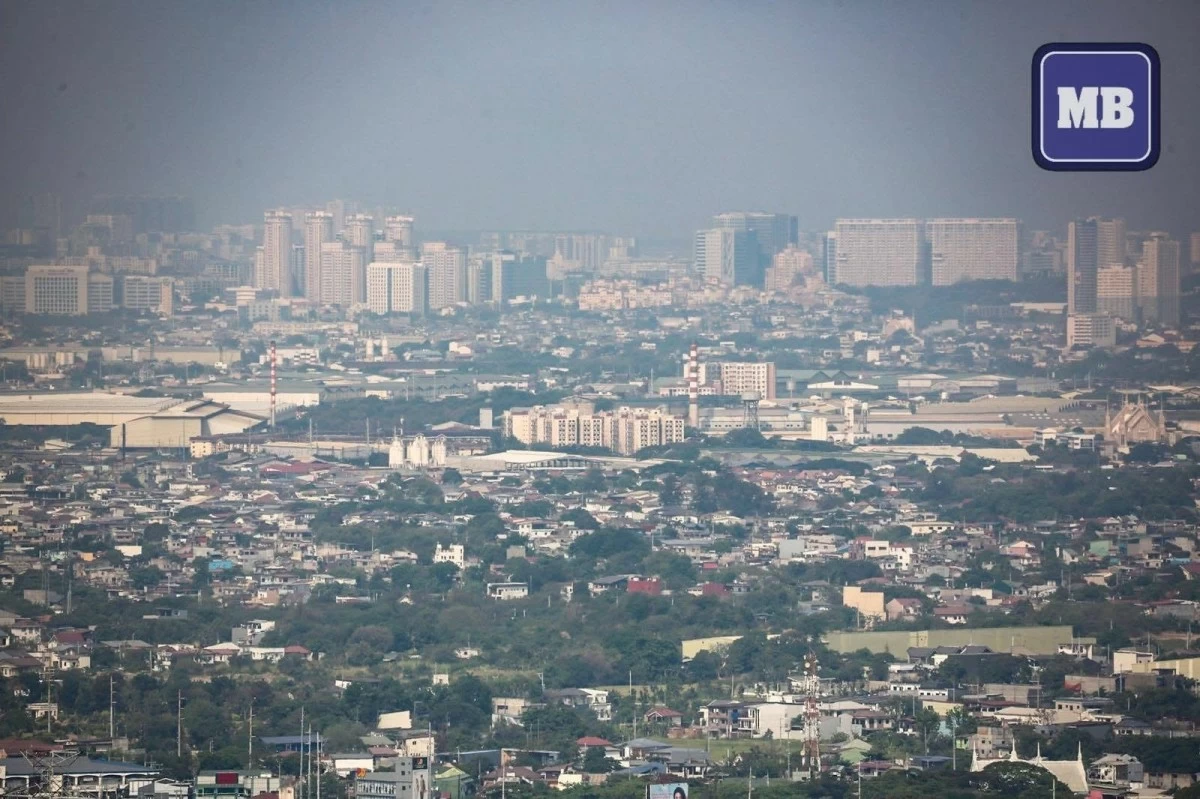
Only four cities in Metro Manila recorded “good” to “fair” air quality levels, while most areas fell under “unhealthy” to “acutely unhealthy” categories following the fire at the Navotas Sanitary Landfill, the Department of Environment and Natural Resources (DENR) said on Sunday, April 19. Citing fine particulate matter (PM2.5) data as of 12 noon, the DENR said Makati City logged a “good” Air Quality Index (AQI) of 30, while Taguig City also recorded “good” air at 50 AQI. Muntinlupa City and Mandaluyong City, meanwhile, registered “fair” air quality levels at 66 and 68 AQI, respectively. However, air quality in most parts of Metro Manila fell to unhealthy levels, the agency said. Valenzuela City recorded the worst AQI reading at 215, classified as “acutely unhealthy.” Several areas fell under the “very unhealthy” category, including Quezon City (SMPH Commonwealth) at 194 AQI, Marikina City at 197 AQI, Malabon City at 198 AQI, Quezon City (Ateneo) at 178 AQI, and Caloocan City (University of the East) at 167 AQI. San Juan City (101 AQI) and Navotas City (138 AQI) were classified as “unhealthy for sensitive groups.” Factors affecting air quality Per Environmental Management Bureau–National Capital Region (EMB-NCR) officer-in-charge Janice R. Pammit, the recent fire at the Navotas Sanitary Landfill was among the contributing factors to the worsening air quality in parts of Metro Manila. She said air quality levels in the National Capital Region are influenced by multiple sources, including industrial activities and vehicle emissions, with the landfill fire further contributing to the overall decline. She noted that PM2.5, or fine particulate matter, poses greater health risks compared to PM10 due to its smaller size, which allows it to penetrate deeper into the lungs. Both types of particles may be inhaled, Pammit said, highlighting the need for precautionary measures such as the use...
Only 4 Metro Manila cities log ‘good’ to ‘fair’ air quality; most areas at unhealthy levels after Navotas landfill fire—DENR
Source: Manila Bulletin
Read Full Story →