
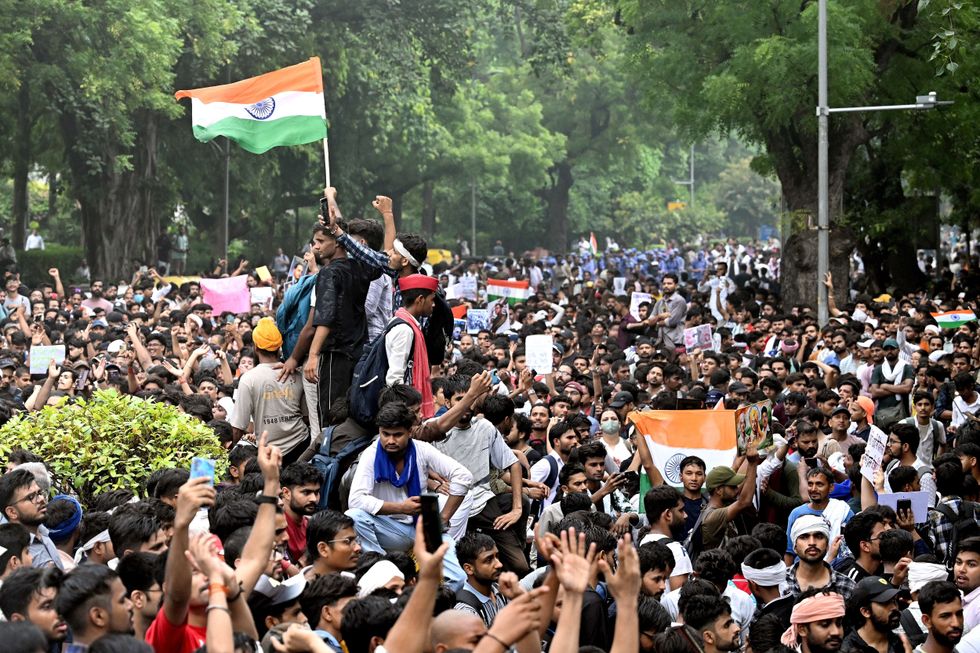
Nearly five weeks after leaders of India's youth Cockroach Janta Party (CJP) launched protests demanding the resignation of the education minister over exam paper leaks, prime minister Narendra Modi posted a selfie video saying he was pained by their suffering and promising remedial steps. The video, posted on Instagram late on Thursday, came after the CJP had gained 22 million followers, mostly from Gen Z, within days of its launch in May. But it failed to satisfy thousands of protesters gathered in central Delhi. Days after they faced a police crackdown and as protests spread across the country, Education Minister Dharmendra Pradhan resigned on Saturday, meeting the protesters' main demand. Pradhan's resignation marks a win for the CJP, whose supporters have mocked Modi through raps, placards and graffiti. It also marks a rare setback for the prime minister, who has dominated Indian politics since taking office in 2014. "A large number of people who were at the protest may actually be his supporters — and that's quite different from other kinds of protests in the past," said Sanjay Srivastava, anthropology professor at SOAS University of London. "What might be interpreted as a win is the fact that there is now a much wider cross-section of people questioning the government. A much wider cross-section has begun to question the idea that the ruling party is necessarily good for the country." The protests began over a leaked medical entrance exam, but analysts said they also reflected wider concerns among young people, including unemployment and fears that AI could replace jobs in sectors such as India's IT back offices. "The paper leak is a trigger point," political analyst Amitabh Tiwari said. "It is largely a reflection of the anxiety, nervousness, discontent, frustration and anger among the youth." Modi's senior ministerial colleague Rajnath Singh...
LIVE
--
--
--
--
--
--
--
--
Global Weather
Loading...
Fetching latest reports
--°C