

The Philippine economy is facing its most severe test from the ongoing oil crisis, with economists warning that surging fuel costs and supply disruptions are exposing deep structural vulnerabilities and could derail growth prospects this year. In separate reports released on Friday, April 10, economists from De La Salle University (DLSU) and London-based think tank Capital Economics painted a stark picture of an economy highly sensitive to energy shocks, with limited buffers to cushion the impact on consumers and businesses. In their report, DLSU economists Jesus Felipe, Mariel Monica Sauler, Gerome Vedeja, and Seth Paolo Paden, together with DLSU political science assistant professor Susan Kurdli and University of the Philippines Los Baños (UPLB) assistant professor Juan Alberto Mercado, described the country’s growth engine as losing momentum. “In our view, the Philippine economy has ‘run out of gasoline’ to achieve the promised growth rates of 6.5 percent and above (adjusted downward several times),” they said, referring to the country’s economic potential. They maintained a 2026 gross domestic product (GDP) growth forecast of 4.2 percent, below the government’s downgraded five- to six-percent target, citing “very high uncertainty derived from the war on Iran,” adding that even if hostilities ease, growth is unlikely to rebound significantly. “Even in case the war ends soon (and we would have to see what this means in practice), Philippine growth would not be much higher than that attained in recent quarters and years during this administration,” the DLSU report said. The economists reiterated their long-standing view that the Philippine economy is structurally constrained. “We have argued since 2022 that the Philippine economy is not built to grow above six percent (its potential). The data have proven us correct,” they said. They warned that the combined effects of the energy shock and lingering fallout from last year’s corruption scandal will continue to weigh on economic activity. “Now, the corruption scandal (is it history?) and the Middle East war cum energy shock will linger for some time and will make achieving higher growth (significantly above six percent) a chimera,” the report said. Beyond growth concerns, the DLSU report highlighted the policy dilemma facing the government, particularly in managing fiscal policy amid rising risks. “We just read that the government congratulated itself for reducing the fiscal deficit in February. This continues to show poor understanding that a fiscal deficit is, peso for peso, a surplus of the private sector, and that an economy with a current account deficit needs a fiscal deficit for the private sector to be able to run a surplus,” the authors said. “Otherwise, the latter will run a deficit and this is what will cause a financial crisis. A government deficit is an injection into the economy, not a sin or a sign of inefficiency.” The report added: “We do certainly acknowledge the dilemma caused by the corruption scandals, and agree that unprogrammed appropriations (UAs) in recent national budgets pose serious risks to fiscal discipline, transparency, and development goals.” At the same time, it stressed that fiscal support remains essential. “Yes, that this problem needs to be tackled does not undermine the importance of understanding that government spending needs to increase and that the Philippine economy needs to run a fiscal deficit.” The DLSU report also examined the government’s response under the state of national energy emergency, particularly its implications for public transport and fuel access. It noted that measures such as fuel subsidies and fare adjustments, while providing temporary relief, remain limited in scope and are often slow to reach intended beneficiaries. The report emphasized that the transport sector—one of the most directly exposed to fuel price spikes—continues to face structural vulnerabilities, including high fuel dependency and thin operating margins. The authors warned that without more targeted and sustained interventions, rising fuel costs could lead to reduced mobility, higher transport fares, and broader supply chain disruptions that feed into overall inflation. They also pointed out that the Philippines’ heavy reliance on imported fuel leaves it highly exposed to external shocks, underscoring the need for long-term strategies such as diversifying energy sources, improving mass transport systems, and reducing oil dependence. Echoing these concerns, Capital Economics senior Asia economist Gareth Leather said the Philippines stands out in the region for the intensity of the price shock. “The exception to this generally benign [inflation] picture [in the region] was the Philippines, where the headline rate rose to a 20-month high on the back of a sharp increase in transport costs,” Leather said, referring to the March inflation rate of 4.1 percent. Leather attributed this to the country’s limited fiscal space, which constrains its ability to shield households from rising fuel costs. “The country’s weak fiscal position limits its ability to shield consumers as other parts of the region have done, so higher energy costs have fed through quickly,” he pointed out. While inflation remains close to the Bangko Sentral ng Pilipinas (BSP) target range, Leather said risks are tilted to the upside. “Although inflation is only marginally above the BSP’s two- to four-percent target, we expect it to rise further in the coming months, peaking at around 5.5 percent in mid-year before easing.” For Leather, the challenge for monetary authorities lies in responding to inflation driven largely by supply-side shocks. “At an unscheduled meeting in late March, when it left rates unchanged, the BSP acknowledged inflation would breach its tolerance band but argued that expectations remain anchored and that monetary policy has limited traction against a supply-side shock. Instead, it will focus on possible second-round effects from the energy shock,” he noted. Leather added that recent developments may provide temporary relief. “The fall in oil prices after the announcement of a two-week ceasefire will further have eased concerns. Overall, we think energy prices would need to rise much further and stay elevated for an extended period for the BSP to hike rates.”
Philippine economy warned: ‘Out of gasoline’ as oil shock deepens risks
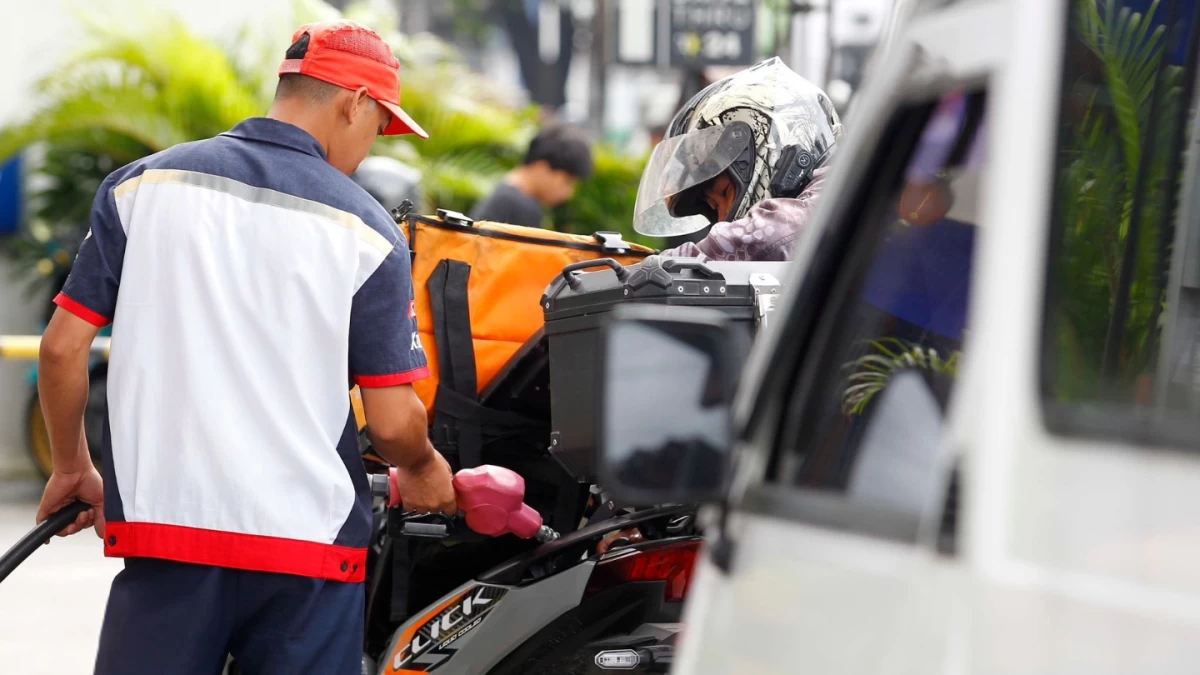
Source: Manila Bulletin
Read Full Story →