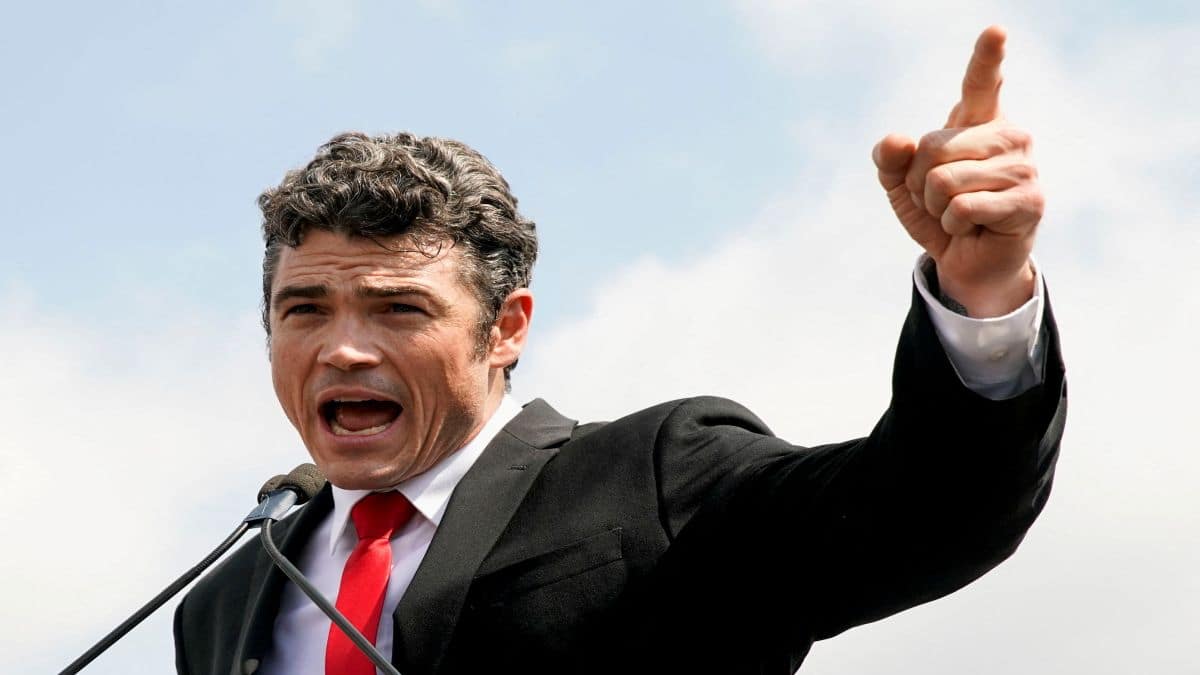

Rapper-turned politician Balendra Shah’s Rastriya Swatantra Party (RSP) appeared set for a landslide victory in Nepal’s general elections, with early trends indicating the party could secure a two-thirds majority. The polls are the first since the Gen-Z protests that erupted in September last year.Former prime minister KP Sharma Oli, whose leadership became the focus of the protests, lost his home constituency of Jhapa-5 by a wide margin to Shah.According to data published by The Kathmandu Post, the RSP was leading in 108 seats. The Nepali Congress was ahead in 13 seats, while the CPN-UML had leads in 14 constituencies.Balen Leads In Oli’s StrongholdBalendra Shah, popularly known as “Balen”, who served as the Mayor of Kathmandu until recently, was leading in the Jhapa-5 constituency against four-time prime minister and CPN-UML chair KP Sharma Oli.Shah secured 15,169 votes, while Oli received 3,344 votes.RSP And Other Results Across ConstituenciesRanju Darshana of the RSP won the Kathmandu-1 seat with 15,455 votes. Meanwhile, Yogesh Gauchan Thakali of the Nepali Congress secured victory from Mustang with 3,307 votes.Former prime minister and Nepali Communist Party (NCP) coordinator Pushpa Kamal Dahal won the Rukum East seat, marking his fifth consecutive term.In Kathmandu-3, Raju Nath Pandey of the RSP was elected to the House of Representatives, defeating Kulman Ghising of the Ujyalo Nepal Party by a margin of 7,586 votes.Balen Likely To Become Prime MinisterThe 35-year-old engineer is widely expected to become Nepal’s next prime minister if the results hold.Much of Shah’s national appeal stems from his tenure as Kathmandu’s mayor, where he focused on improving urban infrastructure.Strong Youth Connect Fuels SupportUnlike many leaders from Nepal’s older political establishment, Shah has largely stayed away from mainstream media engagement.Instead, he maintains a direct connection with young Nepalis through an active presence on social media.RSP Manifesto Focuses On JobsIn its manifesto, the RSP has pledged to create 1.2 million jobs and reduce forced migration, seeking to address widespread frustration over unemployment and low wages.First Election Since Gen-Z ProtestsThe election is the first since the Gen-Z protests on September 8 and 9, which forced Prime Minister KP Sharma Oli to step down despite his coalition holding a near two-thirds majority.Following his resignation, President Ramchandra Paudel dissolved the House of Representatives on September 12.Polls Held For 275 Parliamentary SeatsThe election will fill all 275 seats in Nepal’s House of Representatives.Of these, 165 members are elected directly from constituencies under the first-past-the-post (FPTP) system, while the remaining 110 seats are allocated through proportional representation based on party vote share.
Rapper To PM? Balen Shah’s Party Heads For Landslide In Nepal Polls, KP Oli Loses Stronghold

Source: Abp News
Read Full Story →