Dangote Targets 20,000MW Power Plan as Nigeria’s Energy Crisis Deepens

Dangote Targets 20,000MW Power Plan as Nigeria’s Energy Crisis Deepens

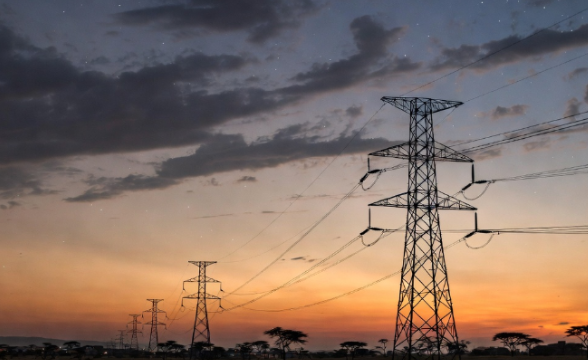
Nigeria’s long-standing electricity crisis may be on the verge of an ambitious private-sector intervention, as Africa’s richest industrialist, Aliko Dangote, signals plans to enter the power sector with a staggering 20,000-megawatt generation target. The proposal, disclosed during a discussion with Makhtar Diop, represents one of the most aggressive private energy ambitions ever contemplated in Nigeria’s struggling electricity market. “We are now going into power… 20,000 megawatts,” Dangote said, framing the move as part of a broader industrial agenda that prioritises energy, fertiliser production, and industrial inputs as Africa’s most urgent development needs. The announcement comes at a time when Nigeria’s electricity supply remains far below demand. Despite repeated government targets and reform promises, the national grid continues to struggle with instability, frequent collapses, and limited output that often falls far short of requirements for a population of over 200 million people. For context, the country has at various times hovered around just a few thousand megawatts of usable power, leaving businesses and households heavily reliant on diesel and petrol generators. The result has been persistent production costs, reduced industrial competitiveness, and widespread economic inefficiencies. The economic burden is significant. According to estimates cited by global financial institutions, unreliable electricity supply drains tens of billions of dollars from Nigeria’s economy annually, with losses often linked to reduced manufacturing output, high energy costs, and productivity constraints. Against this backdrop, Dangote’s intervention is being framed as both bold and controversial. While his business track record includes large-scale industrial successes such as the Dangote Group refinery and fertiliser projects, the scale of the proposed power expansion introduces a new level of complexity. Nigeria’s energy sector has long struggled with structural bottlenecks, particularly in transmission. The national grid is widely regarded as fragile, with limited capacity to efficiently distribute electricity even at significantly lower generation levels than what Dangote is proposing. Industry estimates suggest that the grid remains vulnerable to instability when stressed beyond modest thresholds, raising questions about how 20,000MW would be evacuated and distributed. Another major challenge lies in the sector’s financial health. Nigeria’s electricity market has been described as liquidity-constrained, with distribution companies often unable to fully recover costs from consumers. This has created a chain reaction of debt across the value chain, affecting gas suppliers, generation companies, and maintenance of infrastructure. At the same time, gas shortages and unpaid obligations have contributed to underperformance in thermal power generation. Despite these constraints, Dangote appears to be betting on a vertically integrated model. His existing investments in energy-intensive industries, including refining, cement production, fertiliser manufacturing, and logistics infrastructure, suggest a strategy built around self-sufficiency and internal demand creation. “The needs of Africa are petroleum products and fertilisers,” he said, underscoring his belief that industrial inputs and energy remain central to the continent’s growth trajectory. Dangote has previously outlined expansion plans that include large-scale fertiliser production, mining of key inputs such as potash and phosphate, and investments in liquefied natural gas infrastructure. These projects collectively point to an industrial ecosystem designed to support itself across multiple sectors. He stated: “Today, in about two and a half years, we will be the largest fertiliser company in the world. We are putting up 12 million tons of urea. We are opening up mines of potash and phosphate in Congo and Brazil. We are building the biggest deep-sea port with an 18-meter draft. We are doing LNG.” Still, analysts caution that even a well-capitalised private investor would face steep regulatory, infrastructural, and market challenges in Nigeria’s power sector. The absence of cost-reflective tariffs, weak transmission capacity, and persistent policy uncertainty have historically discouraged large-scale private investments. For now, Dangote’s 20,000MW vision is being viewed as both a statement of intent and a test of Nigeria’s readiness to accommodate private-sector-led energy transformation at unprecedented scale. Whether it evolves into a functioning project or remains an industrial ambition will depend heavily on regulatory reforms, grid stability improvements, and the ability to unlock financing within a constrained power ecosystem.

Source: Brand Icon Image - Latest Brand, Tech And Business
Read Full Story →